
Most parents wait far longer than they should before reaching out for help. It’s rarely because they don’t notice something is off, it’s because they’re not sure if it’s “serious enough” yet, or they hope it will resolve on its own.
That hesitation is common, and it’s costly:
- Half of all lifetime mental illnesses begin by age 14
- The average delay between the first signs and actual treatment is 11 years
That’s more than a decade a child could have spent building skills to manage what they’re feeling, instead spent navigating it alone.
At Serene Behavioral Healthcare, we see this pattern often, and we want parents to know that reaching out early isn’t an overreaction. It’s one of the most protective things you can do for your child.
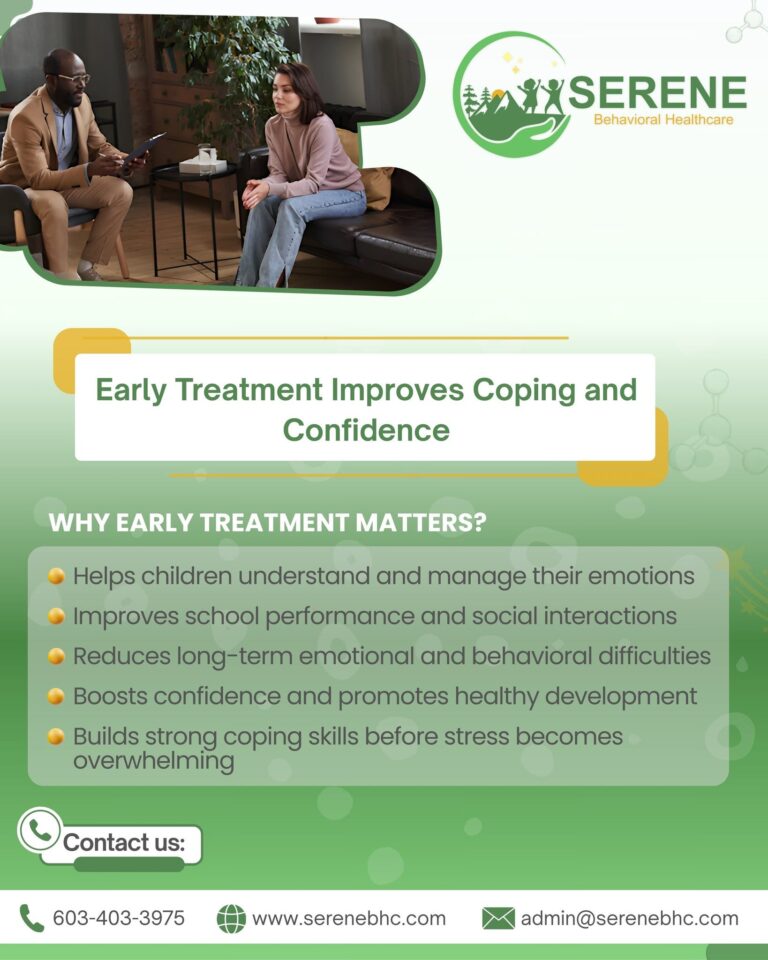
Why Early Treatment Matters
Mental health conditions in children are more common than most people realize:
- Between 10 and 20 percent of children and adolescents experience a mental health condition of some kind
- Roughly one in five young people between the ages of 8 and 25 has a probable mental health disorder
- Two-thirds of adult mental health conditions actually began between ages 14 and 25
This means many adult struggles have roots that trace back to childhood and adolescence, often to signs that went unaddressed at the time.
This isn’t meant to alarm you. It’s meant to reframe what “early” really means.
Early treatment isn’t about catching something dramatic. It’s about responding while a child’s brain and coping skills are still developing, when the right support can change the entire trajectory.
The Five Ways Early Treatment Helps
- Helps children understand and manage their emotions. Kids aren’t born knowing how to name what they’re feeling, let alone regulate it. Early treatment gives them language and tools for emotions that would otherwise feel confusing or overwhelming.
- Improves school performance and social interactions. Anxiety, ADHD, mood struggles, and behavioral difficulties often show up first in the classroom and on the playground before a parent ever sees them at home. Addressing the underlying issue tends to improve both academics and friendships at the same time.
- Reduces long-term emotional and behavioral difficulties. Left unaddressed, early struggles don’t usually stay the same size, they tend to grow more complex over time. Early treatment interrupts that pattern before it takes hold.
- Boosts confidence and promotes healthy development. A child who understands their own mind, and has support navigating it, tends to carry that self-assurance into everything else they do.
- Builds strong coping skills before stress becomes overwhelming. The goal isn’t to prevent every hard moment. It’s to make sure your child has real tools ready before those moments pile up.
The Effects Extend Further Than Childhood
One of the more striking findings in this area comes from a long-term study that followed children who received a mental health intervention all the way into their own adulthood and parenthood, nearly two decades later. Researchers found that the benefits didn’t stop with the original child:
- As adults, former participants showed reduced rates of depression and substance use problems
- Family stability improved, including less use of physical punishment and less food insecurity
- Better outcomes were even visible in the next generation, their own children
In other words, early treatment doesn’t just help right now. It can change the environment your child eventually builds for their own family, decades down the road.
What Early Treatment Actually Looks Like
Seeking support early doesn’t mean your child is labeled or locked into a diagnosis for life.
It typically starts with a thorough evaluation to understand what’s actually going on, followed by a plan built specifically around your child, whether that involves therapy, medication management, or a combination of both.
The goal is always the same: giving your child real skills and real support, at the moment they can benefit from it most.
A Note From Dr. Pereira
As a child and adolescent psychiatrist, one of the most common things I hear from parents is some version of:
“I wish we’d come in sooner.”
Not because anything catastrophic happened while they waited, but because their child spent months or years managing something difficult without the tools that could have made it easier much sooner.
Children are remarkably adaptable, but adapting to a problem isn’t the same as resolving it.
A child who learns to quietly manage anxiety on their own isn’t necessarily doing well, they’re often just doing what they can with what they have. Early treatment simply gives them more to work with.
My advice to parents is always the same: you don’t need to wait for things to get worse to justify reaching out. If something feels off, that’s already reason enough to have a conversation with someone who can help you figure out the right next step.
– Dr. Lionel Pereira, MD Child & Adolescent Psychiatrist, Serene Behavioral Healthcare
Contact Us
If you’re noticing changes in your child and aren’t sure what to do next, we’re here to help you figure it out.